Monday, May 27, 2013

Buddhist studies in Kathmandu


Dear readers,

I have had several requests about what Buddhist studies are available in Nepal, here is the result of my research:

(Kagyu lineage)
The center offers BA and MA and is recognized by Kathmandu University (www.ku.edu.np).
The course take place in the Rangjung Yeshe Institute  (www.shedra.org). 
Where: in the Bouddhanath area of Kathmandu, a very lively Tibetan community

(Sakya lineage)
Several "one month" options from May to September
Where: Bouddhanath area

(Dzogchen, Nyingma lineage)

They have a 3 month winter-spring program (already full for 2013!)
Where: In Pharping, a small village a few miles west of Kathmandu

(Gelup lineage)
Many option but the most popular is the one month Lam Rim course in November each year. 
Where: A few miles north of Bouddhanath

(Kagyu Lineage)
A very popular 2 month program from Jan 7 to March 7 but also a 5 year philosophy program for the more advanced students!
Where: In Tinchuli, a few minutes walk East of Bouddhanath

(Nyingma lineage)
A 9 year program (MA and PhD equivalent), for serious students!
Where: In Bouddhanath area

Let's turn the Wheel of Dharma!
With Love and Light

Tuesday, May 21, 2013

Gosaikunda, the power of the Himalayas. By Gaby

Bharaivkund lake frozen


It is difficult to express fully the experience of walking to Gosaikunda and my experience may not be that of everyone as I have cultivated a life long relationship with the mountains but with the Himalaya and its connection to yoga even more so recently. 


Gosaikund is not like any place, it is a sacred place and has been fed with people's faith, imagination and myth as much as with water form the glacier of the Langtang region. 

Gosaikund is born from the Trishul (trident) of Lord Shiva, after he had swallowed the poison liberated from the churning of the Ocean of Milk (see Samudra Manthan) Lord Shiva felt so thirsty that he needed fresh water immediately, he poked his Trishul into a mountain and drank from the water springing forth. The same spring created the lake known as Gosaikund. It is believed that both sacred river of Kathmandu Valley the Baghmati and the Vishnumati, originating form the Sivapuri hill, north of the city, get their water from Gosaikund. It is also said that the area has 108 lakes...

The lament of the lakes in their prison of ice echoes the lament of my soul in its prison of flesh
In December the lakes are frozen. At dawn or dusk, with change of temperature the ice dilates or retract and cracks. As a result, the lake is chanting and the sound is like the chants of the whales or a musical saw. The first time I heard I was struck: the complaint echoed in the mountains around, something out of this world. I had to listen many more time to figure out what it was. The next day we walked to see as many lakes as possible. We reached a point were we were surrounded by 4 lakes, Gosaikund, Bharaivkund, Kyumachkund and Chandrakund. In the early morning, all the lakes were chanting like talking to each other, each with a different voice. As I sat in silence listening, feeling the vibration deep inside my chest, I had the feeling that the lakes were speaking to me. Not me as an separated individual but me as a part of the universe. The moment was powerful and emotional, at this moment he above words came to me: the lament of the lakes in their prison of ice echoes the lament of my soul in its prison of flesh.

Silence is one, undivided, eternal
Beyond the lament of the lake their were few noisy distraction: the place was amazingly silent. Almost no wind which is rare at this altitude and season. They were moments of silence so deep that your breath and heartbeat became the most noisy part of this universe. I started to listen with concentration to the silence and here too I heard these words: "I am the silence, I am you, you listen to me with your ears but I am also inside of you. The silence you hear now and the silence you seek in meditation are one. Listen to me and you will know what to look for. Listen inside you, you will find me there too."

Between Infinitely big and Infinitely small
Nothing seems to be at human scale in the Himalaya. The sky and mountains are humbling in their size. Almost nu human or animal life, like an invitation to turn toward the small. It is a feast for all the senses here, we walk on plants called Sunpati (the Tibetan burn them in honor to the Gods) and their spicy smell is entrancing, the symphony of color is amazing bright yellow, orange, red, gold... the lichen, moses, flowers, grass offer all kind of textures for the touch from the smooth ice, the rugged rock, the soft cotton like flowers. All these details seems to tell you to turn away from the gross and to focus on the subtle, another form of inner journey.

A dip in a holy (and icy) lake is always a transformative experience!
Spiritual inclination
All through the journey I had this quote from Albert Einstein in mind: "Do not look for miracle, your entire life is a miracle". From the lake echoing the lament of my soul looking for freedom, to the silence mirroring the silence of meditation, the infinitely small grabbing your attention to look inside, all these messages made the trip so magical. My meditation up there was like the lakes, profound and still, it was different, there was a deeper clarity about it.

If the mind is talking but it cannot resist the transformation process that is taking place, much beyond the mind, it is making an ultimate attempt to resist but it already knows the silence that is coming.


Love and Light from Kathmandu!

Thursday, March 21, 2013

Don’t panic, you’re free, the sky is limitless. By Shannon Lough.


Everyone once and a while someone will tell you to “have a little faith” and for a moment you release into the hope that yes, everything will work out. Even with all the uncertainties, and the slight knot of panic that burrows inside when you think about the future, you submit yourself to that little bit of faith.

Faith, a word that denotes God, the Divine, or complete spiritual devotion in intangible concepts. You don’t have to be religious to have faith. It’s simply an act of submission. An act of complete trust in someone or something without any expectations or demands. 
In Yoga, there are specific rules of conduct to follow called niyamas, as compiled by Patanjali in the Yoga Sutras. Of the five niyamas, the first four being purity, contentment, austerity, and self-study, the final is the most abstract at first: Isvara Pranidhana, which asks for complete surrender to God or the Divine to achieve Samadhi. Through this surrender you can achieve an elevated state of consciousness when you connect with the universe. How does this apply to our lives?

Isvara Pranidhana is the faith that we need to embrace. When the present becomes disturbed by thoughts that drift into apprehensions about the future, allow yourself to open up to the idea of surrendering. We cling onto our structured lives, the safety bubble that we lock ourselves into because it seems like a sure thing. Sometimes we find ourselves outside of that bubble, whether you’ve just finished university, a contracted job abroad, or a career. You’ve been released from the safety net that let you sleep comfortably at night. You’re like a free bird that doesn’t know where to find its flock. Don’t panic, you’re free, the sky is limitless. This is the best time to listen to the wind, and the signs that the universe lays out before you and invites you on your path. 

The concept of the Divine turns some away. It seems too religious and enigmatic for the secular world we live in the West today. In regions of India and Nepal, you can witness daily rituals by the locals, surrendering to their definition of their Divine, through puja’s or acts of worship. They ring bells, light candles, chant mantras, send silent prayers to divine images and maintain their altars. In Japan, you see the locals walking in silent meditation through the forest as they sweep the path, or standing before the a temple, and washing themselves in the ash of incense and removing their shoes before prostrating themselves before the Buddha. These are acts of submission, of humbly disrobing the ego-self and embracing the divinity in themselves.

Even in a secular society, we can let go and search for the divinity inside ourselves by connecting to the universe. It’s all about perspective, and how you choose to define the Divine. Instead of thinking of a theoretical being, identify it with what you know. The miracles that are already present inside our own bodies, our beating heart, expanding lungs, our untapped mind. The miracles around us, in nature, the cycles of the moon and the pull of the ocean’s tide, the smell of the forest and the shelter it provides for so many beings, a rolling field of flowers and the powerful presence of a mountain range. Even the miracle of our technology, in the brilliance of the city lights, the sound of communication in the buzz of a mobile phone, or laptop. In moments of obscurity, instead of being the rock, allow yourself to be the stream. Listen to the flow that moves within and outside of you. If you let go, and give trust to surrender completely into universe, it will guide you. Listen to it’s presence and you will find your way.

Cherry blossom petals are falling
Beautiful like snowflakes.
The remaining rest do cling.
Without knowing their destiny. (Zen proverb)


Shannon Lough is a 200RYT, who completed her yoga and Thai massage training with Yogi-Nomad in Nepal.  She practices daily, and follows the principles of Tibetan and Zen Buddhism, after traveling to India and living in Japan for three years.  She is a marathon runner, a hardy backpacker, and an avid writer.  If you have any questions or comments please email her at s.a.lough@gmail.com 

Thursday, February 14, 2013

Self Love for Valentines day! By Shannon Lough.


Happy Valentines Day everyone! A day of roses, romance or repulsion. If you’re with someone, it’s full of expectation that your special someone has to do something for you, or else they don’t really care. If your single, you cringe at the excessive PDAs (public displays of affection), overplayed diamond ads, and gaudy material items being sold at every corner. 

This year, instead of loving or hating Valentine’s Day, I’m going to use it as an opportunity to foster my yogi values from the great Patanjali. Ages ago, this legend compiled the Yoga Sutras, and set out the foundations of yoga philosophy. One of the keys to reaching liberation and clearing the mind is to overcome the Kleshas, or afflictions of the mind that make us suffer in this life. I want to focus on two of these Kleshas.

Raga - desire, wanting. That which makes us chase only what is pleasurable in our minds, and makes us want to repeat the experience continuously. Like, having a wildly romantic romp with your lover, after a candle-lit dinner followed by chocolate dipped strawberries. Every year, you want this experience, or better, and you’re drawn to this particular date because it’s a special time when you can relive that moment. 

Dwesha - repulsion. The opposite of raga, it makes us run from the undesirable and unpleasant. It’s full of disgust, negativity, and blocks us in moving forward. So you hate the idea of anything that screams lovey-dovey, because you might throw up a little. It makes you despise this particular holiday because it makes you feel nothing but hurt and disappointment inside.

The Kleshas are afflictions of the mind. Not the heart. Valentine’s Day is just another day that we decide whether we like it or not. The day itself is just a perception that we have created in amongst our many afflictions. We suffer because we allow this day to take on an importance in our lives. We are stronger than that. We don’t let society create our expectations. Instead, let go and let it be as it is. It’s a day of love, so love fully and consciously. 

I’m usually the cringing type that loves to bad mouth February the 14th, but secretly I always hope something special and unexpected will happen. Which again, is an expectation, and therefore will ultimately lead me to suffer in my own disappointment. 

This year, I’m going to fight the Kleshas, those petty afflictions, and embrace the day as though it’s a greater excuse to send all my compassion to everyone I meet. To those I don’t see, I’ll be sending some your way too. It will also be a chance to focus more on self-love. Why not? Who said that Valentine’s Day is only about love for another. How about loving yourself first? I think that means I have an excuse to eat some dark chocolate, and then some.

I dare you to try: Watch your mind, and see where it goes when you see a cheesy advertisement, or when you go on a date with your partner. Try to stay present and embrace every moment as it comes, without expectation, clinging, or wanting more. Everything you need is right there, so enjoy it. 

Only think or say positive comments towards yourself all day. Avoid the negativity that you hold on to. Take a break for at least one full day. So instead of saying “I like” or “I don’t like” try to stay neutral.

Love yourself and love others with the fullest of your compassionate heart. 

The Rose
Misery and joy have the same shape in this world:
You may call the rose an open heart or a broken heart.
-Dard (Sufi wisdom)


Shannon Lough is a 200RYT, who completed her yoga and Thai massage training with Yogi-Nomad in Nepal.  She practices daily, and follows the principles of Tibetan and Zen Buddhism, after traveling to India and living in Japan for three years.  She is a marathon runner, a hardy backpacker, and an avid writer.  If you have any questions or comments please email her at s.a.lough@gmail.com 

Wednesday, January 30, 2013

Home is... By Shannon Lough.


I’ve called many places my home. A two-story home in a small-town subdivision; a single flat for staff housing sandwiched between a petrol station and bar in a glacier tourist town; a trailer adjacent a raging river, and within the facilities of a popular backpacker hostel; a holiday-home in a popular extreme sports tourist town, at the base of mountain; a tent, in my hobo days; the first story of a duplex; an ex-communist student dorm; a tatami-floored Japanese apartment in a mountain village between Fuji-san and Tokyo; and recently, at the Yogi-Nomad’s home in Kathmandu valley full of budding yogis. I use my grandfather’s expression, that “home is where you hang your hat.” It could be in the back of a car, a beach along the Sea of Japan, or a 200Rs monsoon-sodden bed. But is this home? 

A forest dweller's home
Home is a concept that many of us get attached to. It’s a place where you store your stuff, and your memories. It gives one a sense of security, that after the day there is a place where you belong. A place where loved ones can greet you. A place where you can unwind and feel protected from the world out there. This is the tangible ‘home’ that many people associate with. 

This material place called home also becomes a nest of insecurities, as all attachments do. It’s full of possessions. Expensive or invaluable items that for years have been collected and arranged in your space, and create your sense of identity. With attachment comes fear, that you may lose one of these items, or someone may steal them, or the house could burn down. But you go on vacation and pick up another souvenir that will look great on your shelf, so when people come to visit they think how amazing your life is, and how beautiful your collections are. The ego stays ever present, and grows with each new piece of clothing, or decoration in your home. You build and build this material world around you and call it home. Until, you have to move. 

Nepali homes
Last year, one night I was sitting in meditation, I realized that my time in Japan was coming to an end in less than six months. I had too much stuff. I tried to find my concentration, and I ended up with stress about how I was going to take my snowboard with me. Where could I send it, if I didn’t know where I was going to be? I filled my head with worries over all that winter clothing, jackets and my closets packed with more clothing. Then I realized that I was stressed about stuff that had defined me somehow. I was a snowboarder. I was a hiker. I was teacher. Yet, I knew I had to let it go. I couldn’t admit it to myself. A special person said to me, “remember that a tool is only good when you are in need of it, if you carry it unnecessarily with you all over it will become a burden and keep you attached to this world.” I knew that he was right, and I was set on letting go of my attachments. I sold or gave away all my gear and clothing. Steadily, the burden lifted, and I felt freer. 

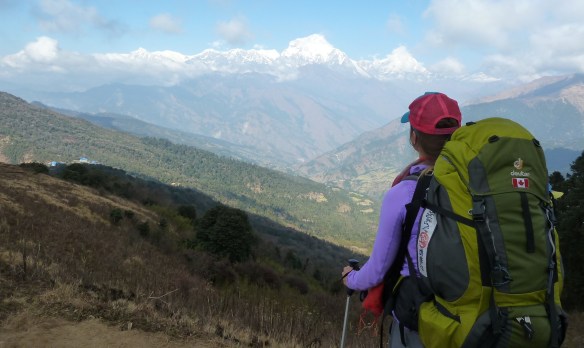
It is a process. I traveled to India and Nepal with a 60L backpack, that I crammed till it bulged and spilled out from the top. I had given up my so-called sense of security by ending my contract, leaving my apartment, and sending half my things to Canada, half to Thailand. I had minimized my home to a backpack, which I still managed to overburden myself with. I felt awkward every time I left a new place, and had to swing it precariously up over my shoulders, and waddle to the bus stop, or shove it into an auto-rickshaw. I met a guy who was traveling the boundaries of India with only a school-sized backpack. He inspired me. He was so light, and carefree. He probably only had one outfit, and a few accessories to change up his style from daytime to nighttime outings, like a scarf or a hat. He didn’t have a lot to worry about, and he seemed happier because of it. While I sweat, and toiled with my pack, he strolled effortlessly as we both walked the streets of Dharamkot looking for accommodation after we left the Tushita meditation centre. Again, I had to rethink the concept of home. 

My backpack home

While we had been in the ten day Tibetan Buddhist retreat, we watched The Nature of Mind the teachings of Tenzin Palmo, a female monk who had spent twelve years living in a cave up in the Himalayas. Whatever she had discovered while living in the ten by six-foot cave, was apparent in the spark in her eyes and the command of her words. I wrote in my notes in brackets “(blowing my mind)” because she did. She said: “the mind is our true home, but we don’t clean it, get rid of the junk, exercise it, or air it out” I had never considered my mind as my home before. As a wanderer, a global nomad, I had always considered my home to be the place where I hung my hat, not inside the place where I wore my hat. 
Once you realize that your home, your true home, is your own mind, then you begin to feel a sense of relief. Everything that you need is right here. We are capable of complete happiness, if we know that we already have that light inside of us. Once we embrace that concept, then we let go of our fears of losing the external home. Whether you’re crawling into a sleeping bag, in a one-man tent, under a starry sky, or you’re nuzzling next to your partner in a king-sized bed, in a prefabricated home in the suburbs, you take that moment for what it is and enjoy it fully, without the worry of losing it tomorrow. 

My school-sized backpack friend told me to read Jon Kabat-Zinn, a Professor and author of discovering mindfulness in the West. While I was trekking in the Annapurna region, I read his book Wherever You Go, There You Are. I found nuggets of wisdom throughout the text. Especially in his concept of home. Let me share with you what I discovered during intimate moments of reading in the freezing cold guesthouses that I stayed at along the route.
So why not let go and admit that you might as well be at home wherever you are? Right in that moment, you touch the core of your being and invite mindfulness to enter and heal. If you understand this, then and only then will the cave, the monastery, the beach, the retreat center, offer up their true richness to you. But so will all other moments and places.

Somehow, through all the places I’ve called home in my past, I have arrived back in the place that I called home while I was growing up. From childhood to young adulthood, I was in this place that I had so many different emotions and feelings in. I have felt a welcoming, a familial love, warmth, protection, but also dread, disappointment, the feeling of being trapped and lost. How can one place harbour all these opposing emotions? The answer is that it was never my childhood home, the tangible one in a small suburban country town that fostered these forces, it was my mind. I am capable of creating all these conundrums. But I am also capable of contentment, of finding that place of acceptance and awareness in the present moment, and to embrace it fully. 


On a January day, in the beauty of the snow melting under heavy rain, birds seem unaware 
of the elements as they perch on a feeder, and children play outside in the slush with rubber 
Yogi home
boots under soggy snow pants. We have the power to chose how we see the world. I now clean my home daily. I give it a time to unwind, to rest. I guide it towards those I love, those I don’t, and those I don’t know. I send my compassion to them all. This morning I did a guided meditation with Yin yoga guru, Bernie Clark. He finished off the session with: “Breathing in, breathing out. Right here, right now, I am alive, I am breathing, I am home.”


Take a moment, and consider, where is your home?


Shannon Lough is a 200RYT, who completed her yoga and Thai massage training with Yogi-Nomad in Nepal.  She practices daily, and follows the principles of Tibetan and Zen Buddhism, after traveling to India and living in Japan for three years.  She is a marathon runner, a hardy backpacker, and an avid writer.  If you have any questions or comments please email her at s.a.lough@gmail.com